Leaving for a different place

A significant part of my research at Baker’s Flat is about migration – where did these hundreds of Irish people come from, and how did they end up in a field in Kapunda? Why did they come in the first place – was it escape from famine, to rejoin family, for work, for adventure?

An Easter trip to Melbourne brought me to the Immigration Museum, which is currently showing an exhibition called Leaving Dublin. It features photos of people about to leave Ireland, captured over the last three years by Irish photographer David Monahan. Many of these new migrants have tried to explain why they’re leaving, and these quotes add depth to the pictures – stories of despair, hope, excitement, adventure, the basic need for a job.
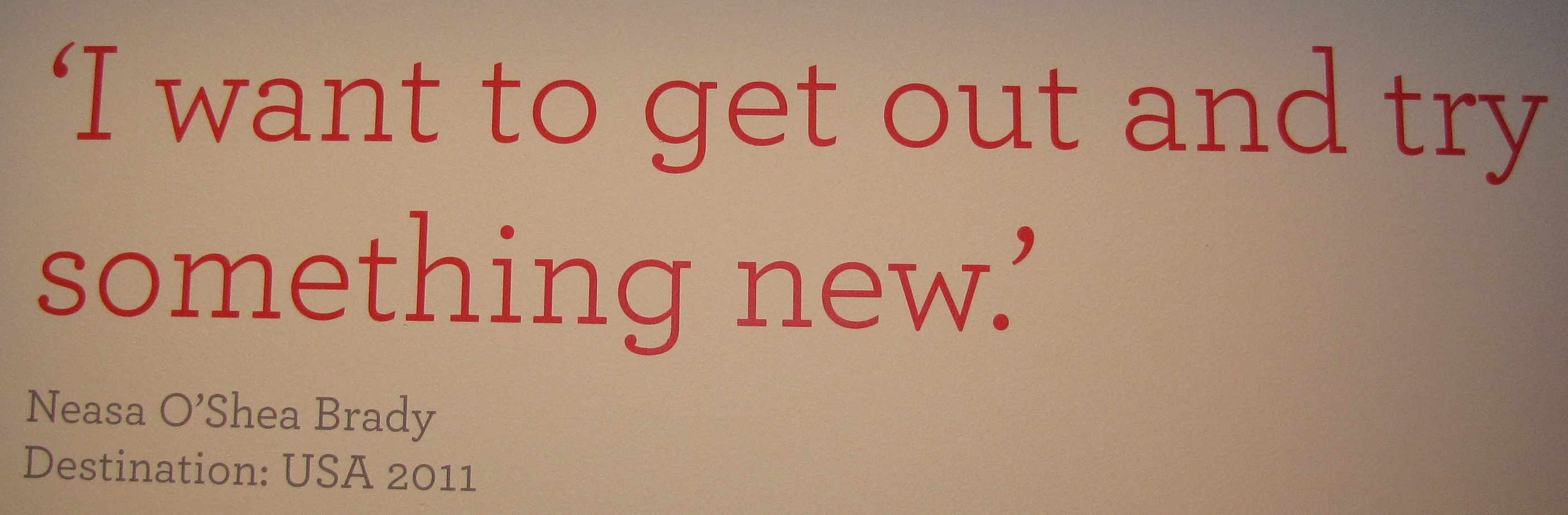
I want to get out and try something new
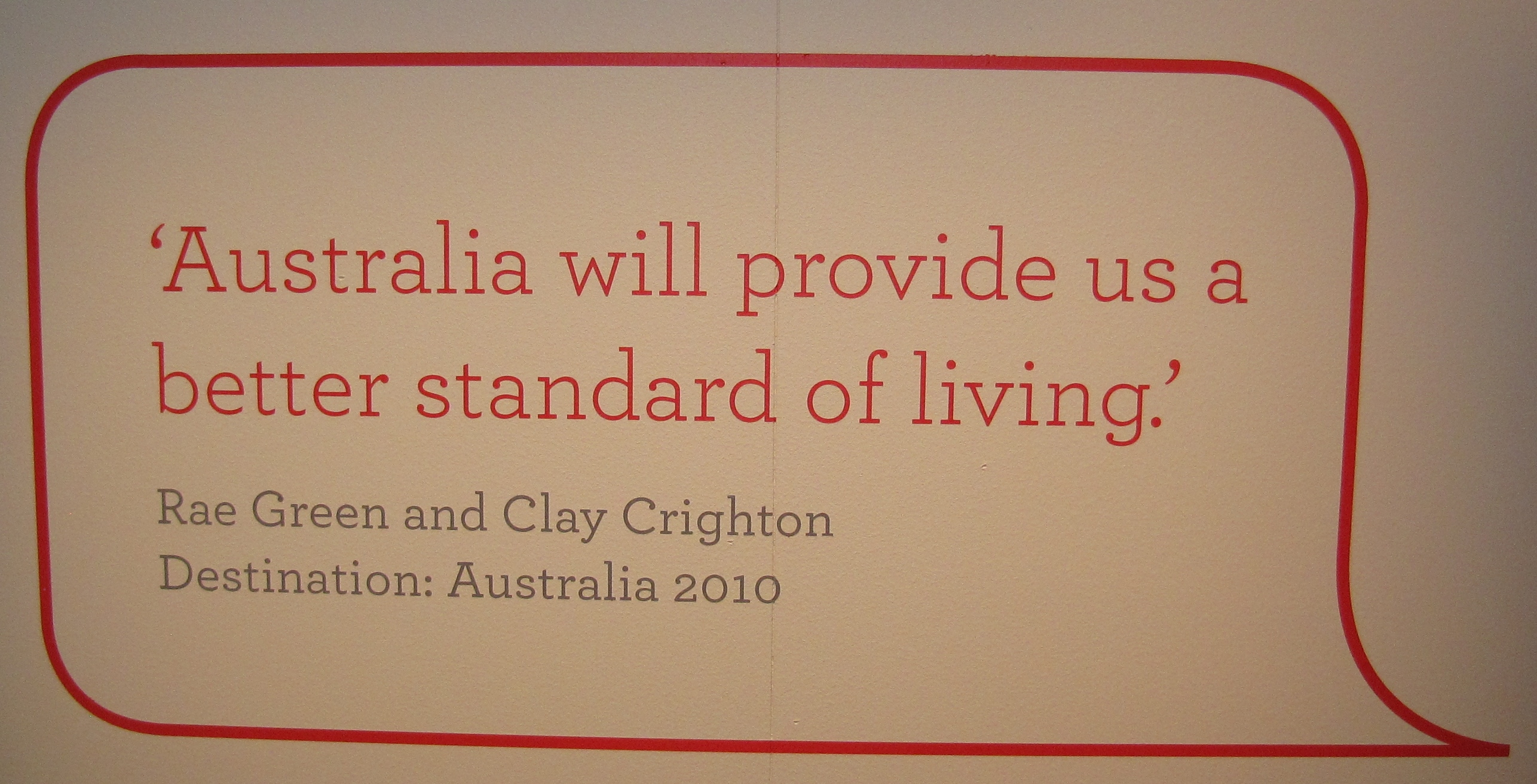
I want to get out and try something new

Australia will provide us a better standard of living
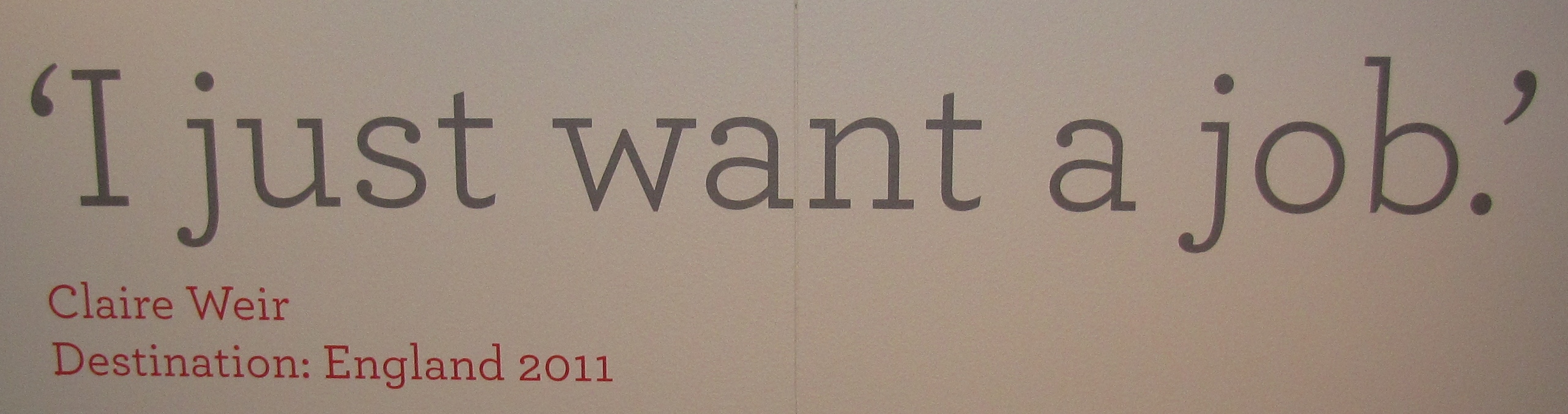
Australia will provide us a better standard of living

I just want a job
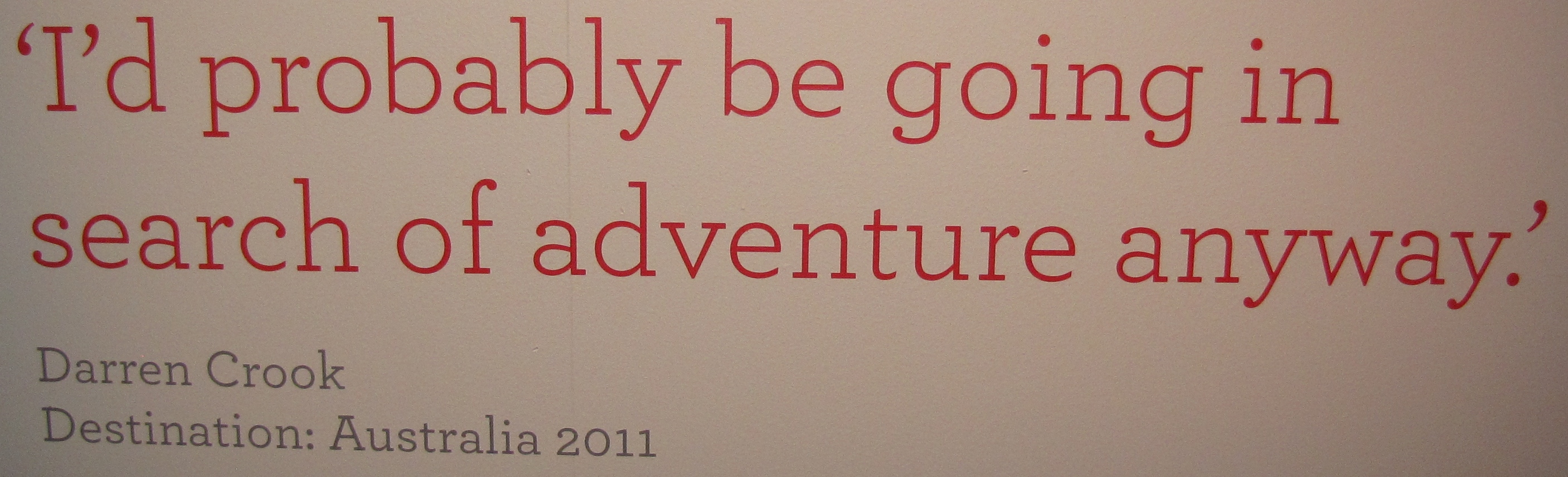
I just want a job

I'd probably be going in search of adventure anyway
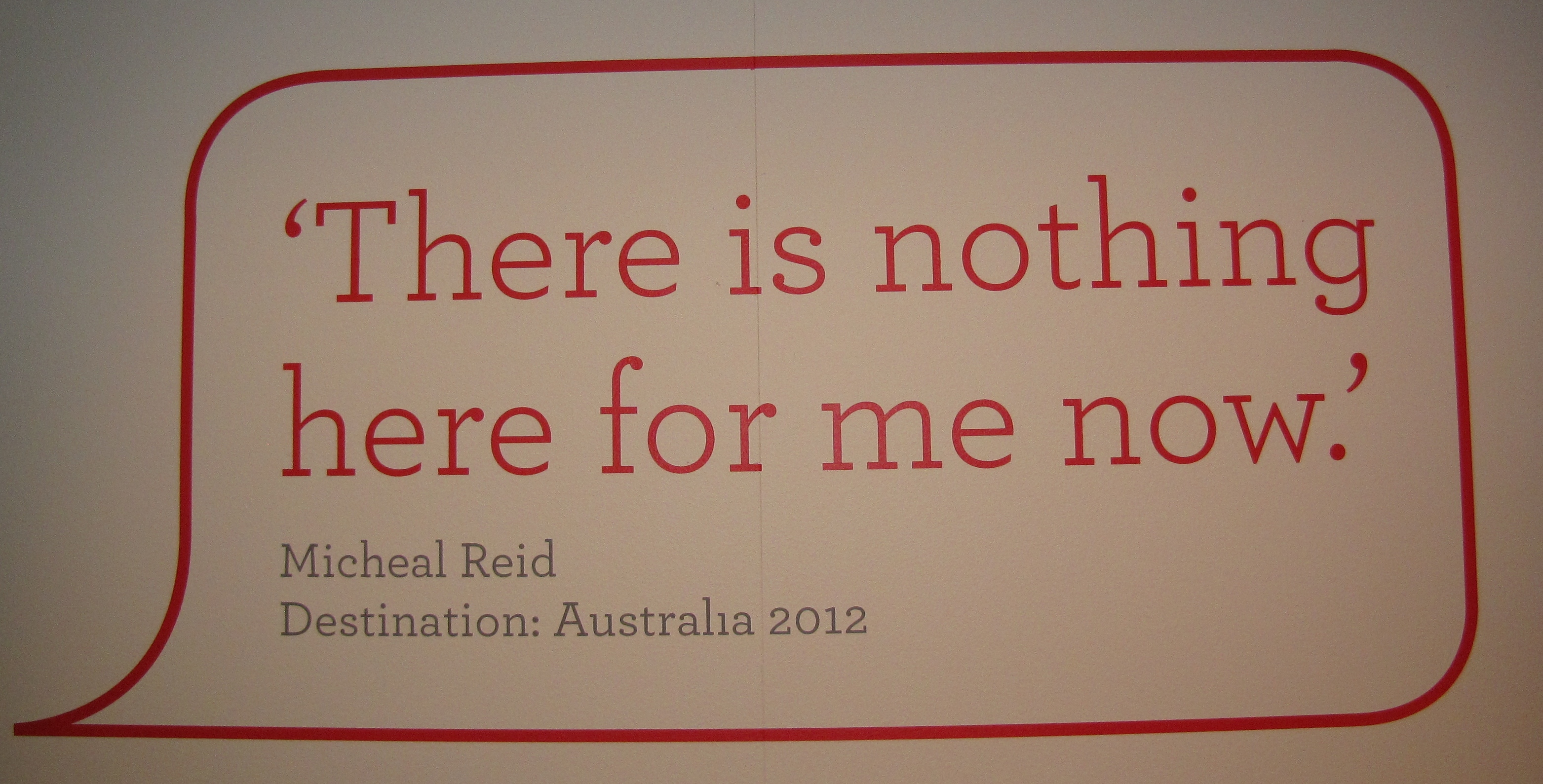
I’d probably be going in search of adventure anyway

There is nothing here for me now

There is nothing here for me now

What struck me were the similarities between these migrants and the last great wave of emigration from Ireland in the 1980s – when we and our friends left for Britain, America or Australia, driven by the same needs and feeling the same emotions.

Pondering further, I suspect that these drivers were similar for the Baker’s Flat people. Certainly, some needs are critical – a job and an income, being able to provide for yourself and your family. But amongst all of those migrants, there would be men and women seeking adventure or acceptance, to live somewhere they might fit better, or just to find a different place and see what it’s like.
Posted in Baker's Flat, Migration | Tagged , , , | 2 Comments

Fruit and fungi in all their glory

Recently I’ve been musing on plants and their significance, both in economic terms and in folklore and myth. A chance trip at the weekend to the Museum of Economic Botany in the Adelaide Botanic Gardens recalled me to a display that I’ve admired for many years.

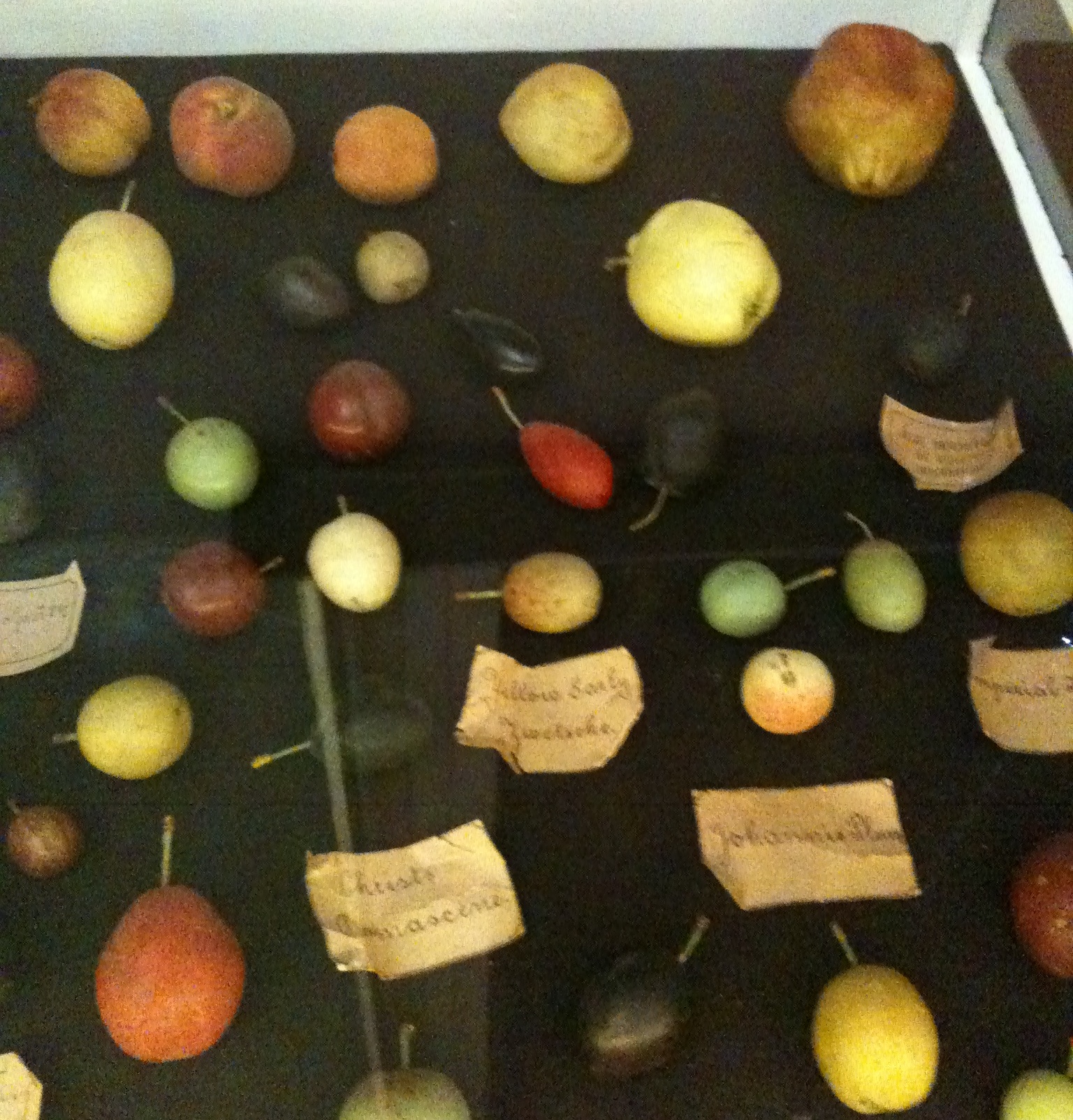
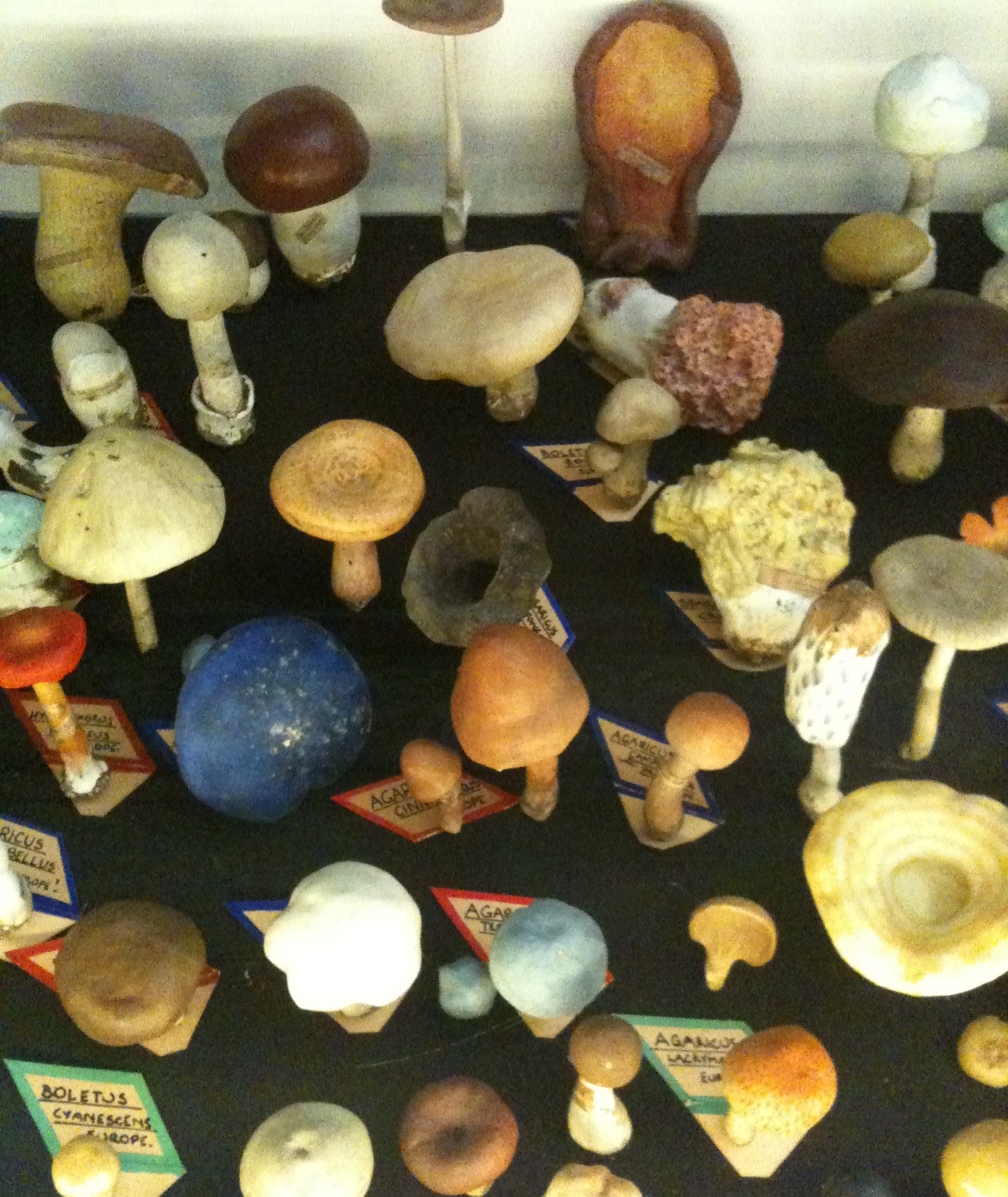
Witness the models shown below. There are fungi and fruit of all types. They were made in Gotha, Germany by Heinrich Arnoldi and Co, and date from the 1870s and 1880s. Best of all, they are made out of papier mache – Arnoldi figured out a way to apply a stucco finish to papier mache models, giving them a realistic look.

Each fungus has a handwritten colour coded label – blue means edible, red is poisonous and green is harmless.

Papier mache fungi, Museum of Economic Botany

Papier mache fungi

There are many apples and pears – the photo below shows a small selection.

Papier mache apples, Museum of Economic Botany

Papier mache apples

Here are some plums. And an exception in the collection – the pomegranate at the top right; this is wax and the sole object remaining from an 1888 collection of wax fruit models – it appears that they melted during the hot Adelaide summers.

Papier mache plums, and one wax pomegranate, Museum of Economic Botany

Papier mache plums, and one wax pomegranate

The Museum of Economic Botany is open Wednesday to Sunday, 10am to 4pm. It’s the last purpose-built colonial museum remaining in the world, and if you like nineteenth century time capsules, it is outstanding.

Posted in Flora | Tagged , , , | Comments Off on Fruit and fungi in all their glory

Ceramic finds at Baker’s Flat

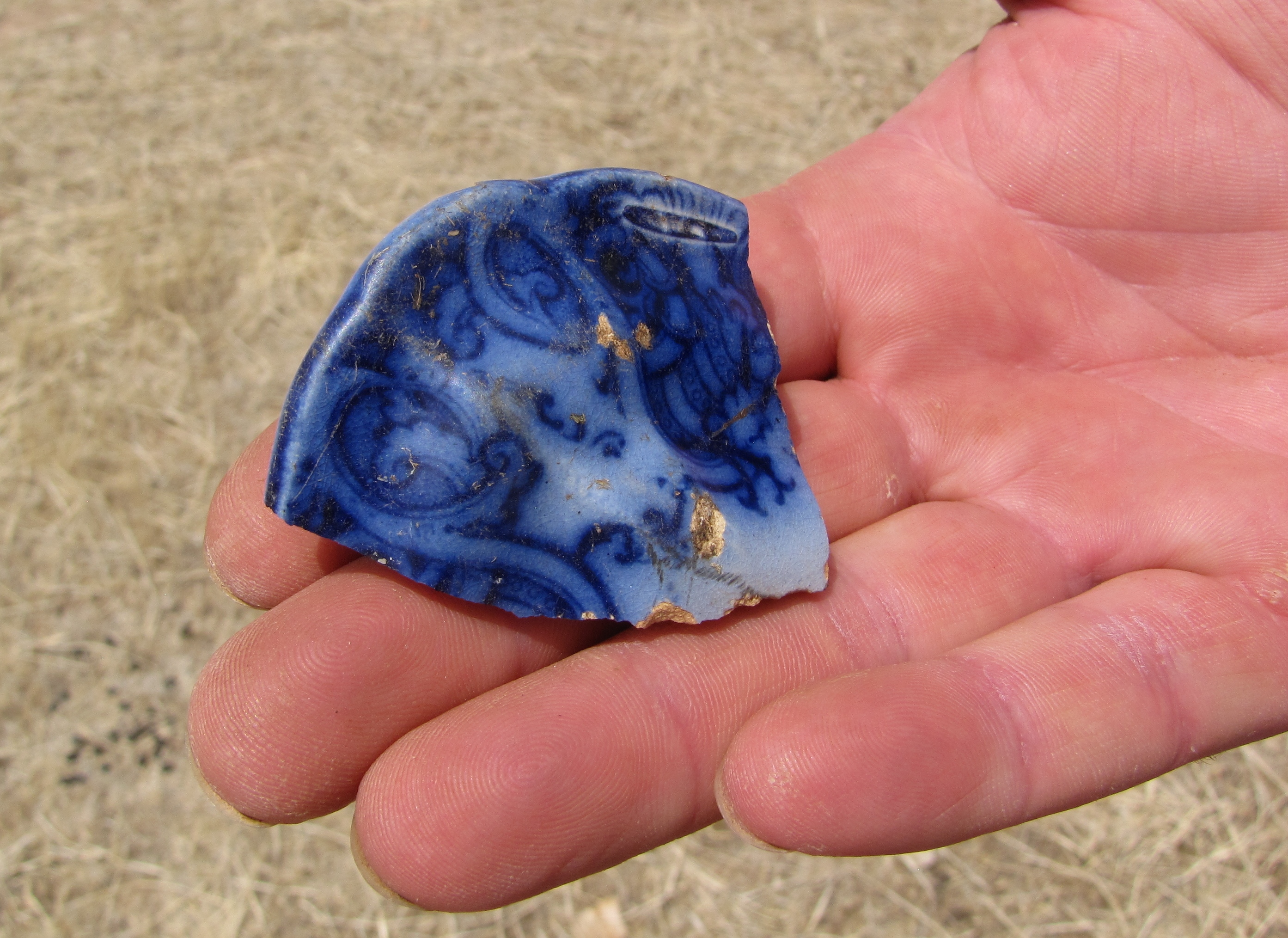
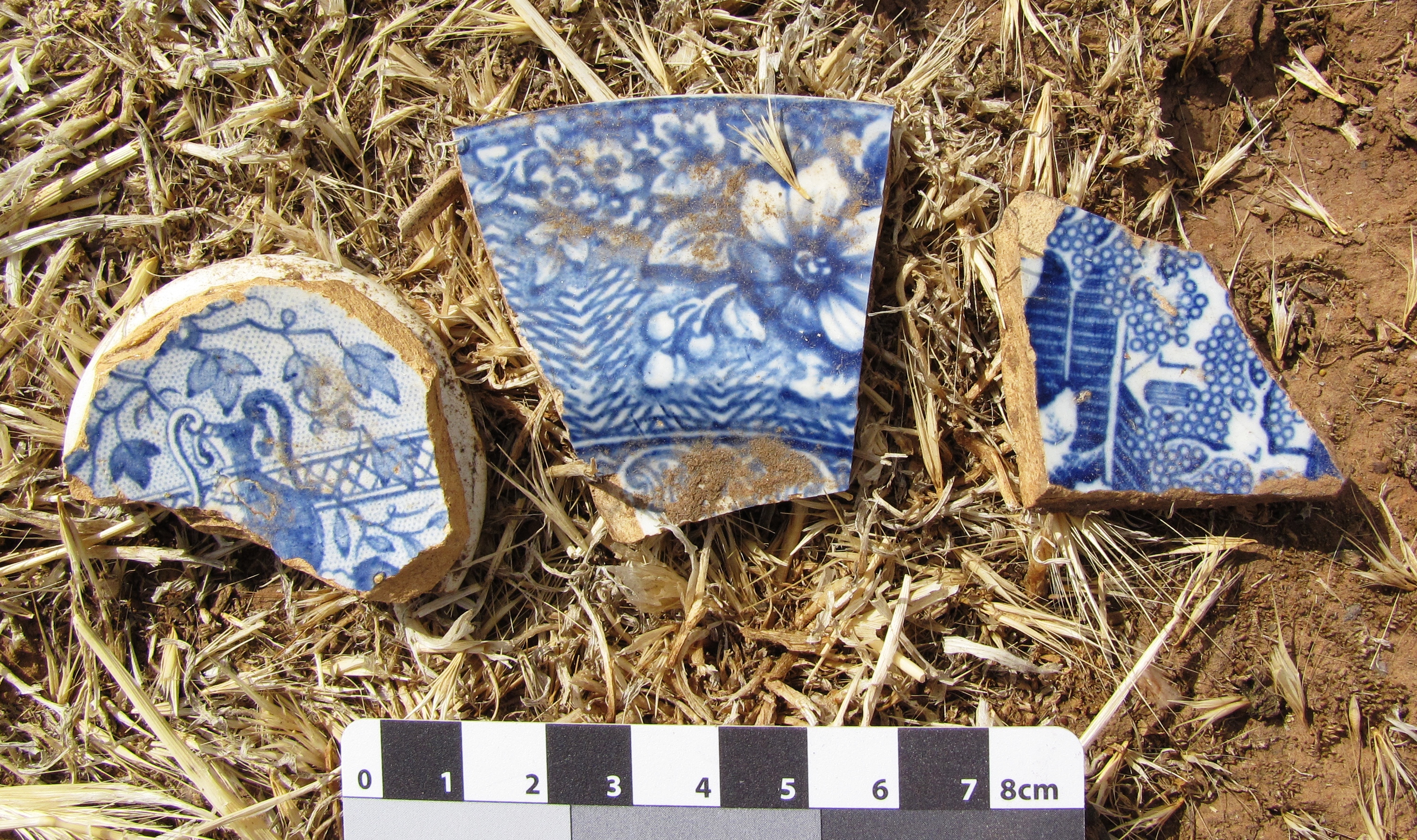
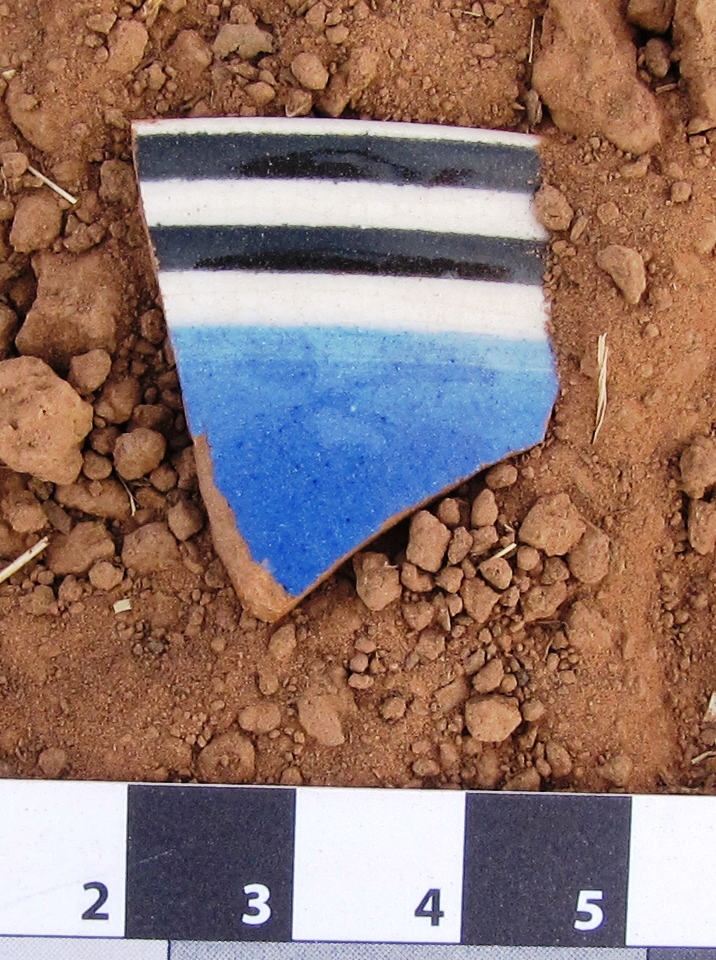
Whilst the focus during the recent field survey was on identifying the locations of building remains, I couldn’t help but be seduced by some of the artefacts on the ground. The photos here show some of the ceramic shards.

The flow blue technique was popular between the 1820s and 1860s – a chemical reaction was used to achieve this ‘soft’ effect. This piece may be from the lid of a tureen.

Flow blue ceramic shard

Flow blue ceramic shard

Transfer printing, shown in the three shards below, enabled the mass production of perfectly matching tableware, and was in production from the mid to late eighteenth century. The most common transfer print, and one that most people are familiar with,  is the Willow pattern – the shard on the right bears some resemblance to Willow but I don’t think it is.

Three transfer printed ceramic shards

Three transfer printed ceramic shards

This piece of banded ware was one I got excited about. It has echoes of the old Carrigaline banded tableware (light blue or brown/mustard) that was common in Irish houses. To me, this shard looks very Irish. Comments and arguments welcome!

Banded ceramic shard

A ceramic shard, with two thin black bands and a wider blue band

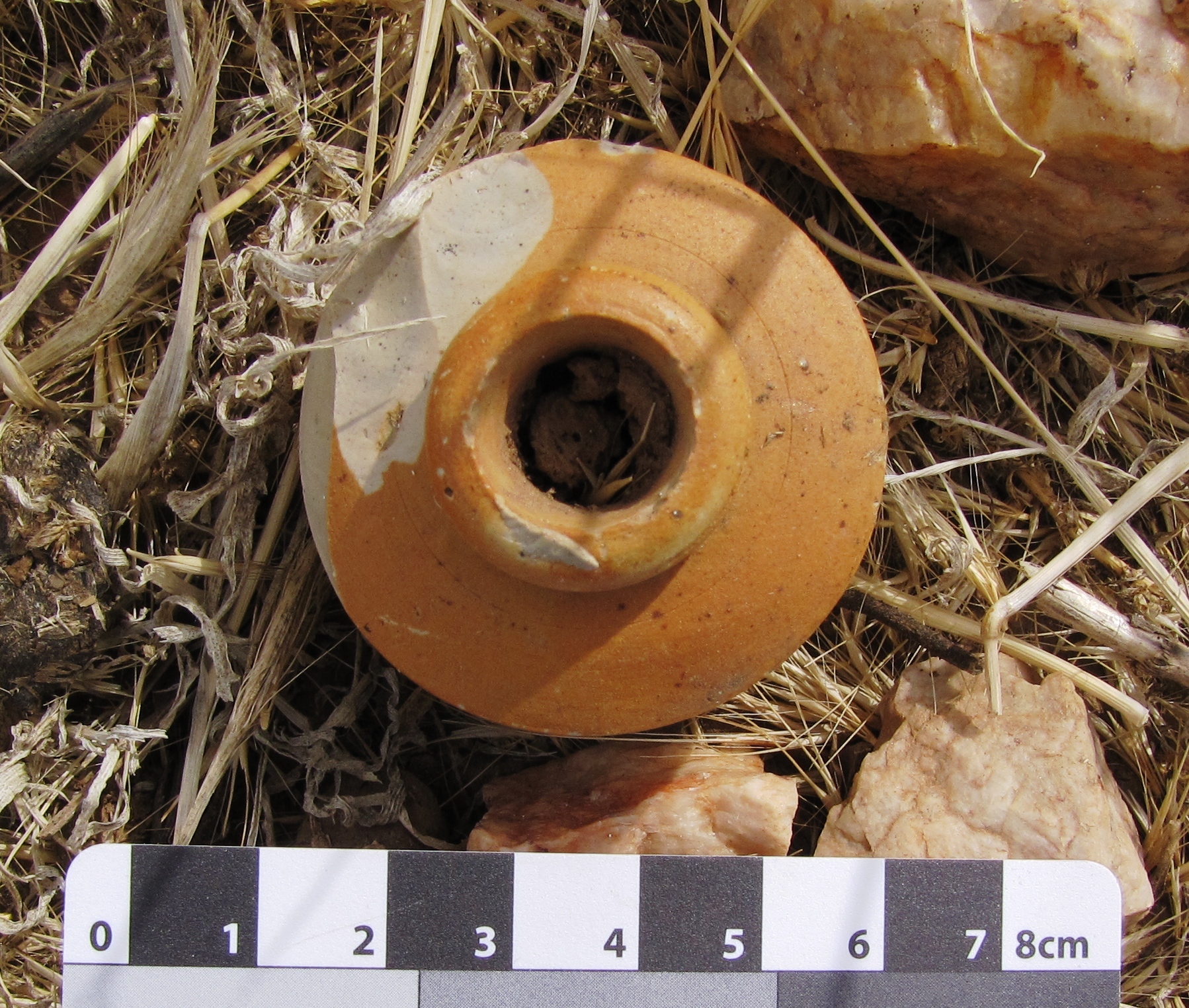
We found a few ink pots scattered across the site, and this is one of them.

Stoneware ink pot

Stoneware ink pot

Posted in Baker's Flat, Field work | Tagged , , , | 2 Comments

Field work at Baker’s Flat

With great good fortune, a Flinders University archaeology field school enabled me to undertake some early field work at Baker’s Flat recently. The site is big, extending over about 170 acres (70 hectares). And in a bid to understand it better, the focus during the field school was to use survey methods to identify the locations of any building remains, artefact scatters, a purported dance floor area and the original entrance way. 

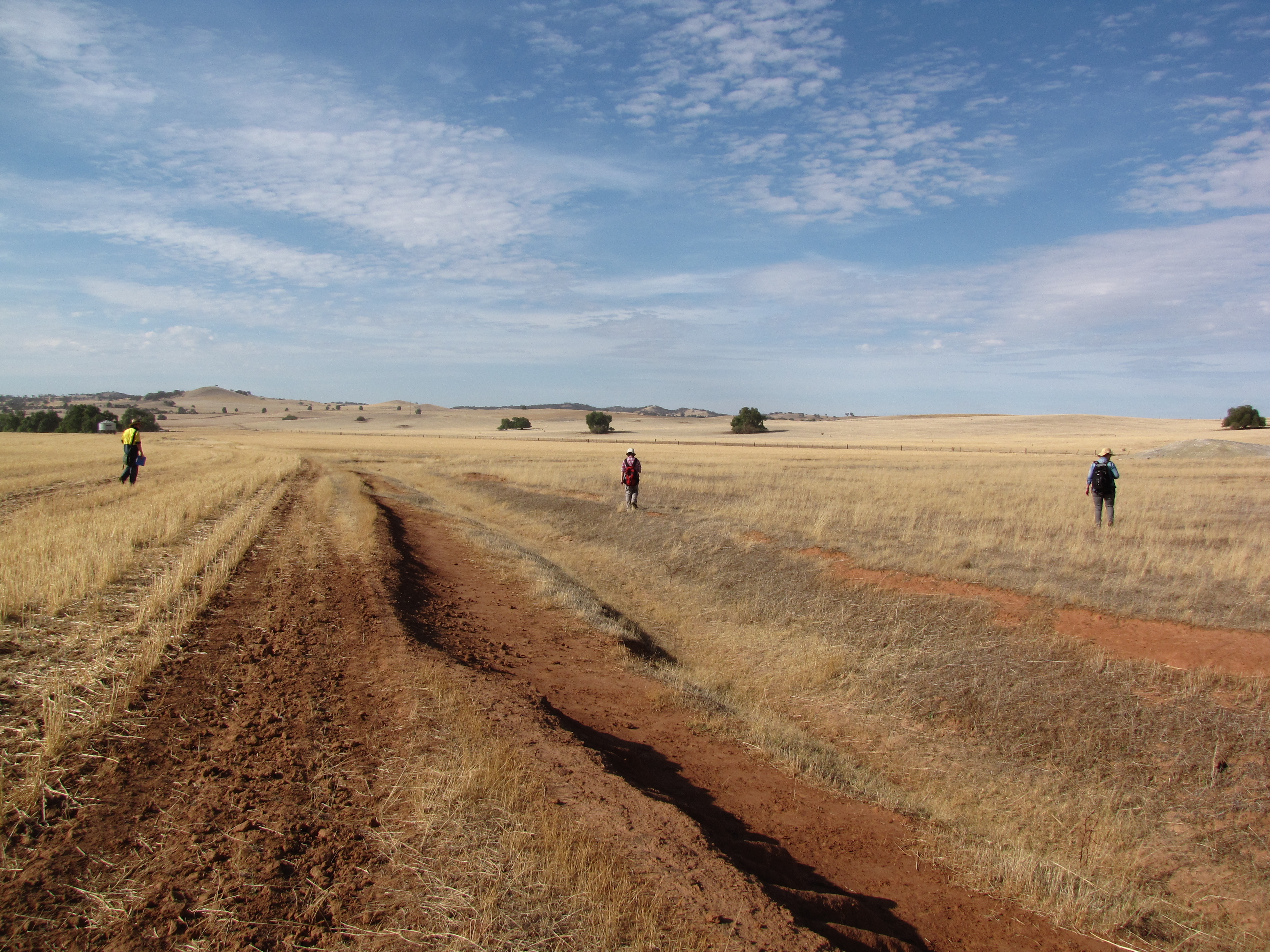
A GPS transect survey was carried out and recorded the remains of at least eight buildings, several artefact scatters, the compacted dirt dance floor, and the entrance way. The survey took place across 25 metre transects using 13 students, and covered about 20% of the site.

GPS transect survey at Baker's Flat

GPS transect survey at Baker’s Flat showing 3 of 13 students

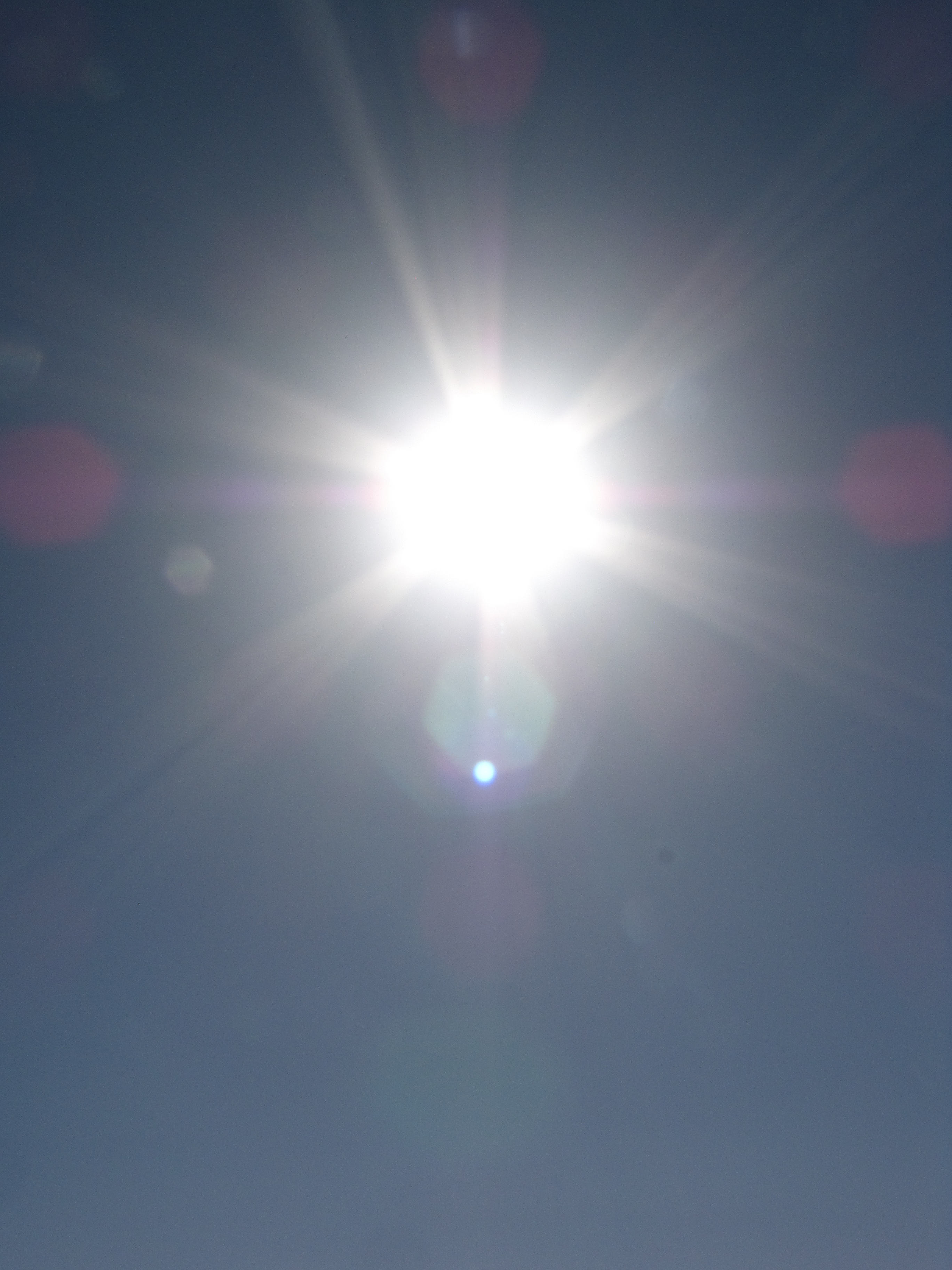
You probably can’t tell from the photo above, but the one below might give a clue – it was very hot and sunny. This can be a bit of a trial for those of us from the northern hemisphere. The days ranged from 34 to 38 degrees Celsius, and everybody developed coping strategies. Covering up of course – hats, long sleeves, long trousers, boots. Drinking lots of water. But the technique I found most effective was to soak as much of my clothing as possible in water, and use that as natural air conditioning for the ten minutes it took to dry out – this provided temporary but welcome relief. 

The Australian sun

The Australian sun


Posted in Baker's Flat, Field work, Kapunda | Tagged , , , | 4 Comments

What is this place called Baker’s Flat?

Baker’s Flat is the site of a nineteenth century Irish settlement near the town of Kapunda in the mid-north of South Australia. It is also the focus of my Masters in Archaeology research project.

Kapunda is about 70km north of Adelaide. In the mid-nineteenth century, copper was discovered there, which led to the establishment of a mine in 1844. Over the next ten years, many Irish migrants arrived in the area, probably attracted by labouring work available at the mine.

The area immediately south of the mine was known as Baker’s Flat, and this was where the Irish migrants lived. To begin with, they built rough shelters. Later on, they built Irish-style stone cottages with thatched roofs and whitewashed walls. The site was occupied right through to at least the 1900s, although numbers varied over this time.

Bakers Flat cottage 19th century

Irish-style cottage on Baker’s Flat in the 19th century

Posted in Baker's Flat, Kapunda | Tagged , , | 4 Comments