Remember the dog tags?

I wrote a post last year about the dog tags that were found on Baker’s Flat.

1885 dog tag

1885 South Australian dog tag for District No. 78, Kapunda District Council

Since then, I’ve found out lots more about dog tags, mainly thanks to a 2005 book by Neil Ransom on the history of dog registration in South Australia. The various Dog Acts from 1852 to 1884 were driven by the need to manage and control the number of dogs at large. Especially the female ones – bitches on heat were reported as being followed by up to sixteen male dogs, which tended to cause consternation among the public, with women and children frequently having to seek refuge in shops. See? It’s always possible to find a justification for popping into an attractive shop.

The 1884 Dog Act increased the dog registration fee, which had been 5s, to 7s 6d for male dogs, but to 12s 6d for females – an inducement to reduce the number of female animals. Did it work? Well, possibly not in Kapunda. Of the 108 dog tags located on Baker’s Flat, 70% (n=76) are from females. You can tell this from the tag because tags for female dogs had a second hole at the bottom.

There was a widespread belief that females were better hunters, so this may have been why female dogs continued to be kept. When the 12s 6d fee was mooted, one man responded: ‘It must be remembered that raising fees would press hardly on poor people. A poor man has as much right to keep a slut [common term for female dogs] as a rich one. The sluts are better than male dogs for catching possums. I know poor people who have earned fifteen pounds in a season by catching possums. If you were to put a heavy registration fee on the dog of a family like that, the effect might be to drive the family into the destitute asylum’ (Ransom 2005:19).

And if the females were seen to be better hunters, maybe they were the dog of choice for coursing. The inaugural meeting of the Kapunda Coursing Club took place on 19 June 1889 in a paddock on the Anlaby estate. A speech by Mr Morris of Anlaby during the lunchtime break indicated that the ‘encouragement and proper conduct of legitimate sport would do away with the loss to sheep owners by roving mongrels’ (Kapunda Herald 1889).

Sadly, I may never be able to find out what types of dogs were registered in Kapunda, and if they might have been suitable for hunting. The dog registers appear to have been destroyed. Although the State Records Office holds some registers, none of them are for the Kapunda area. And they’re not languishing in the local library, the museum, or even the police station. So, if you’re clearing out an old house in Kapunda, and you fall over some nineteenth century dog registers, you know where to come!

References:
Ransom, N. 2005 Collared: A History of Dog Registration in South Australia. Campbelltown: Neil Ransom.

Kapunda Herald 1889 Kapunda Coursing Club Inaugural Meeting. 21 June, p.3.
Posted in Baker's Flat, Cataloguing | Tagged , , , , , | 2 Comments

On curing warts

I found a wart on my finger today. Not hideously disfiguring, but I’d rather it gone. And the first thought I had after I’d found it was, ‘It’s a pity I’m not home, I could go down to the jealous man and woman and get rid of it there’.

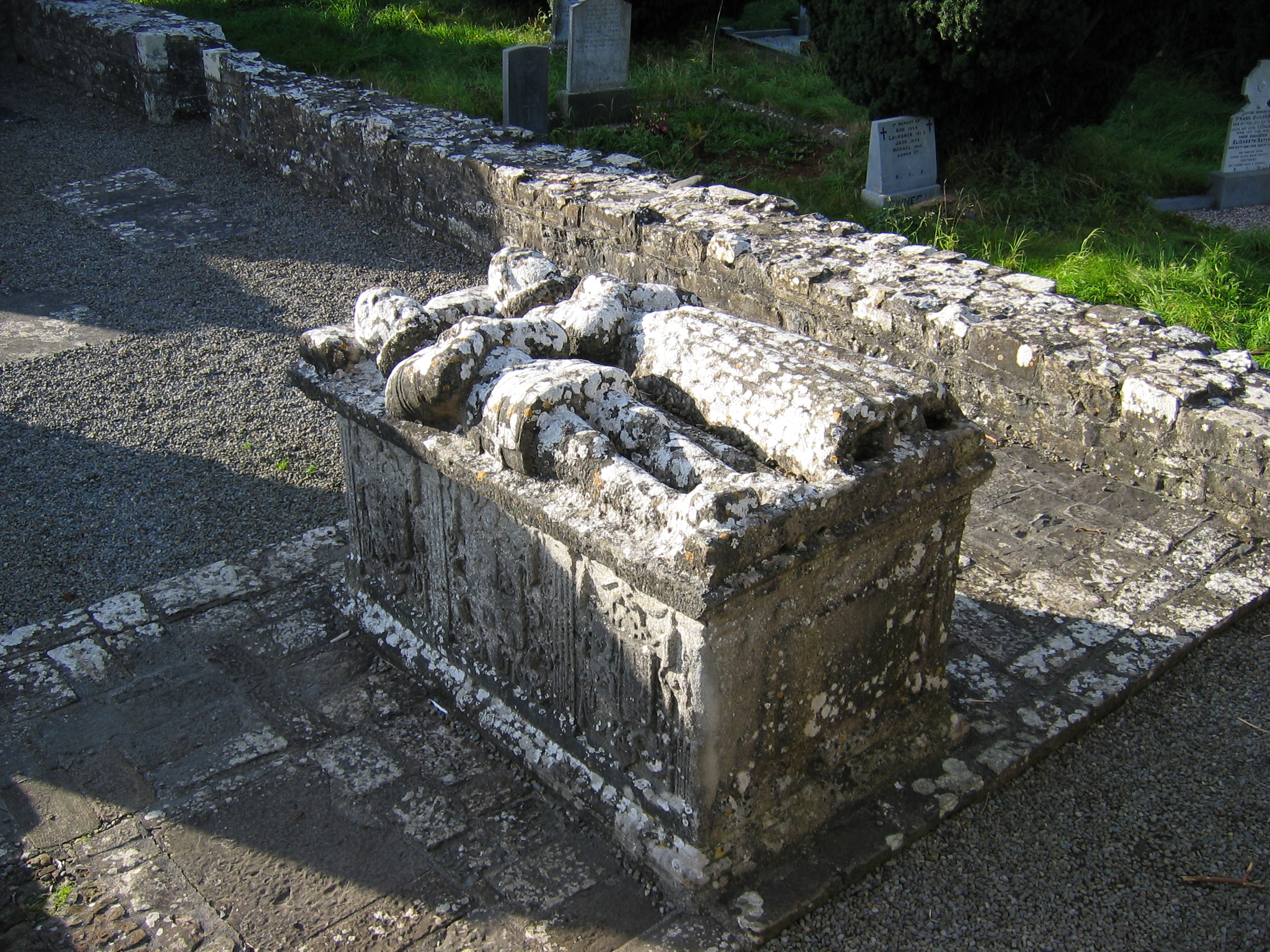
I know that means nothing to most people. But to anybody that grew up in Trim, Co. Meath, it’s how you get rid of warts. Just outside the town boundary are the ruins of the mediaeval Newtown cathedral and parish church. And the Tomb of the Jealous Man and Woman.

Tomb of the Jealous Man and Woman

Tomb of the Jealous Man and Woman – renowned for curing warts

You bring a pin to the tomb, and leave it somewhere between the effigies of Sir Lucas Dillon and his wife, Lady Jane Bathe. Then you pick up a rusty pin from the hundreds that have been placed there previously, rub it on your wart, and wait for it to disappear. As children, we had various embellishments. You had to say a Hail Mary as you rubbed the wart. Or you had to say a Hail Mary while walking round the tomb three times in a clockwise direction as you rubbed the wart. From what I hear now, the practice has been shortened to a brief rub with a rusty pin – no prayers or perambulations necessary. Or an even quicker and less invasive procedure – bring up your pin, drop it on the tomb, do nothing else, and as it rusts your wart will fade away.

So there goes all my evidence-based, scientific theory out the window. And let’s embrace the folk cure.

Hundreds of rusty pins

Some of the hundreds of rusty pins left at the Tomb of the Jealous Man and Woman


Posted in Around the world, Folk charms, Folk traditions, Ireland | Tagged , , , , , , | 2 Comments

Mystery metal man – could he be Charles Gavan Duffy?

A little while ago, I wrote about the small metal bust of an unknown man, found some years ago on Baker’s Flat. I had a theory it might be Gladstone. But now there’s another contender. One of the followers of this blog, who lives in France, thinks my mystery metal man might be Charles Gavan Duffy. (Thank you, Ann.)

Duffy was born in Ireland in 1816, studied law, became a journalist and poet, was a well-known Young Irelander and land reform activist, and helped established a weekly journal, The Nation, which supported Daniel O’Connell’s movement for independence.  He was elected to the House of Commons in 1852, but in 1855, despairing of Ireland’s chances of independence, he resigned and moved to Australia with his family.

He settled in Melbourne, became a politician, and was the eighth Premier of Victoria. Apparently, he was one of the most colourful figures in Victorian political history. He later retired to France, and died in Nice in 1903. So … a rebellious Catholic Irishman, known for his land reform ideals. A good fit with the people of Baker’s Flat? The photos below show Duffy, and the mystery metal man. Maybe it’s him?

Charles Gavan Duffy, 1850. From the image collection of the National Library of Australia

Charles Gavan Duffy, 1850. From the image collection of the National Library of Australia (http://nla.gov.au/nla.pic-an9482275)

Mystery metal man. Possibly Gladstone?

Mystery metal man. Possibly Gladstone? Or even Charles Gavan Duffy?

And because nothing’s ever simple, there’s another mystery – Duffy was buried, according to the records, in Glasnevin Cemetery, Dublin within the circle of the Daniel O’Connell monument. But Ann (in France) has been part of a group which helped to clean up his grave in Nice. So where is he really?

Posted in Baker's Flat, Cataloguing, Migration | Tagged , , , , , , , | 2 Comments

Keeping the traditions alive – St Brigid’s crosses

The month of February is associated with St Brigid, one of Ireland’s patron saints, and whose feast day is celebrated on 1 February. She was a contemporary of St Patrick, renowned for her holiness and goodness. One of the legends about her concerns her dealings with the king of Leinster, who she approached to donate land for a convent. He wasn’t too keen, so Brigid asked if he would give as much land as her cloak would cover. Well, he didn’t think this would be too onerous, and agreed to the deal. When she spread her cloak on the ground, it immediately grew until it covered many acres. Brigid got her land, and apparently a convert to Christianity as well.

The tradition that we were interested in last weekend was the St Brigid’s cross. Originally a pagan symbol, this small cross is usually made from rushes that are woven together to form a centre square with four radials, tied at the ends. They’re associated with St Brigid because it appears she made one while attending a death bed, and the dying man was so taken with it that he converted to Christianity. The crosses also act as a protective charm, guarding the house from fire and evil – this probably harks back to their pagan origins.

At the weekend, a group of us gathered to continue an Irish February tradition of making St Brigid’s crosses. We took inspiration from some particularly delicious cupcakes, created for the occasion by a local artisan baker, Antoinette’s Table.

Cupcakes decorated with St Brigid's crosses

Vanilla bean cupcakes decorated with St Brigid’s crosses

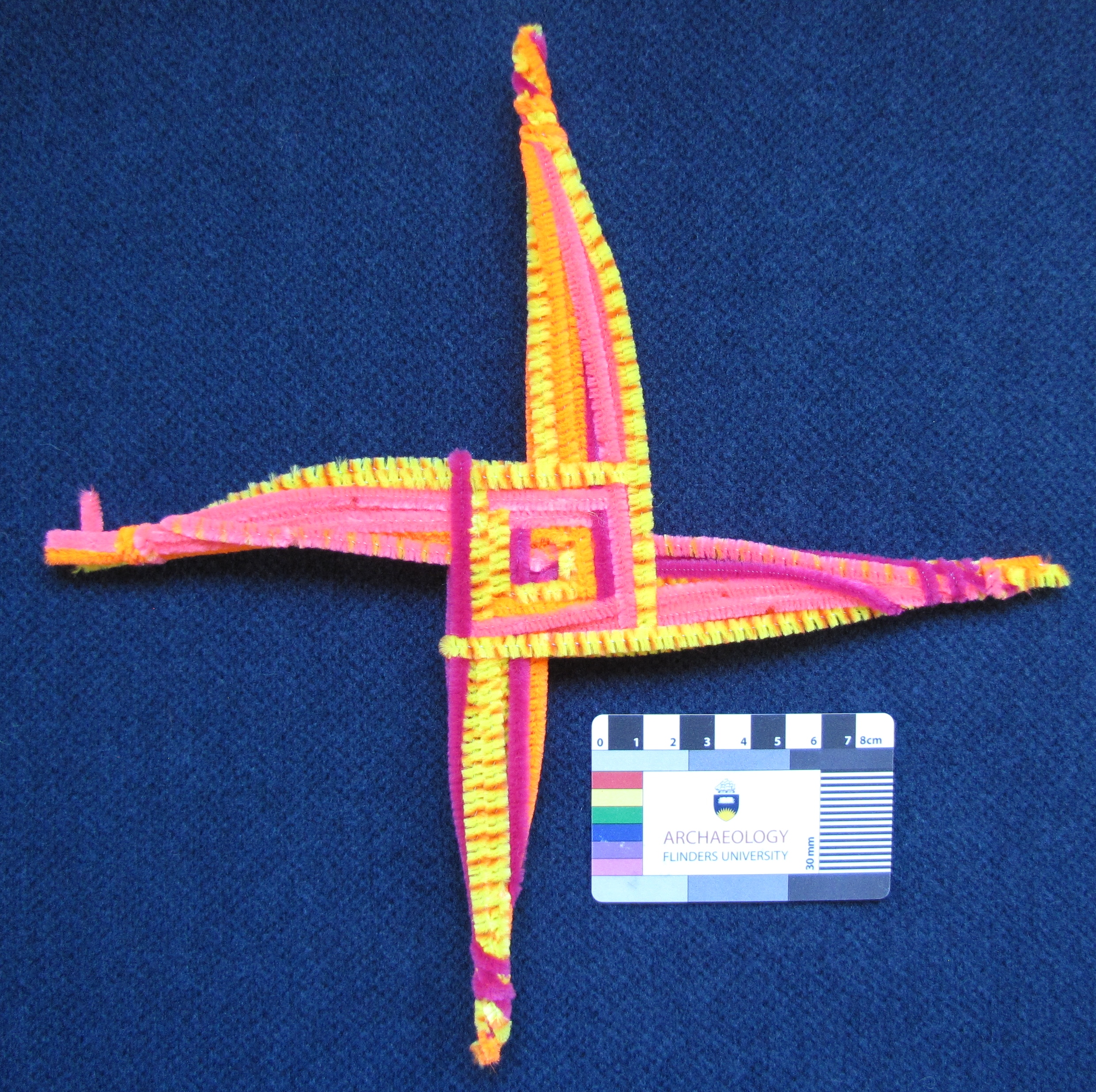
We began with pipecleaners. This was mainly because it is hard to source sufficient rushes in the driest state of the driest continent. And also due to a fear by some attendees of suffering grass cuts from the reed-like grasses I had liberated from a local council garden bed, discreetly using scissors, and two small boys as decoys.

A colourful St Brigid's Cross made from pipecleaners

A pink and yellow St Brigid’s cross made from pipecleaners

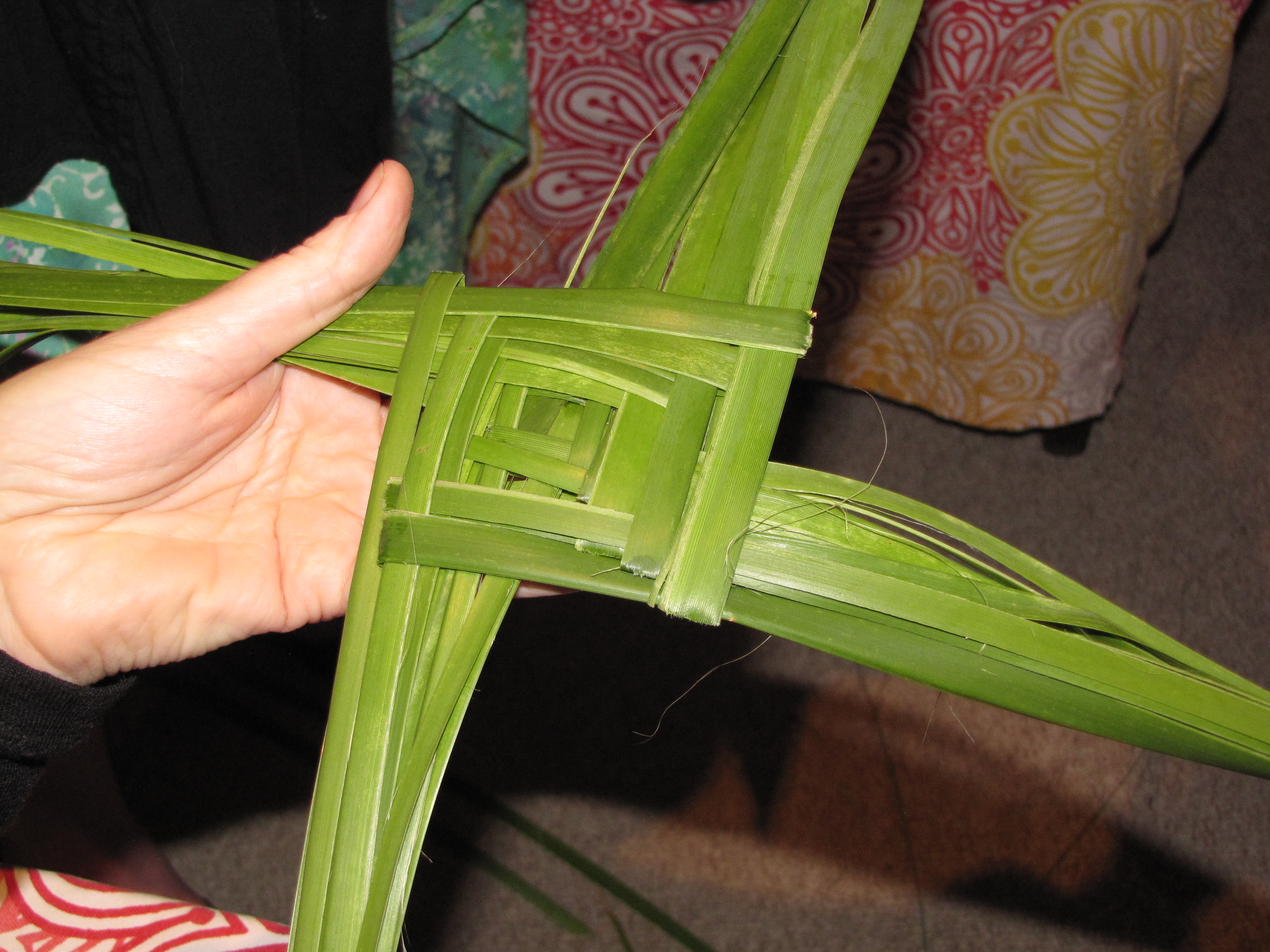
The braver amongst us progressed to the grasses.

Using reeds to weave a St Brigid's cross

Using reeds to weave a St Brigid’s cross

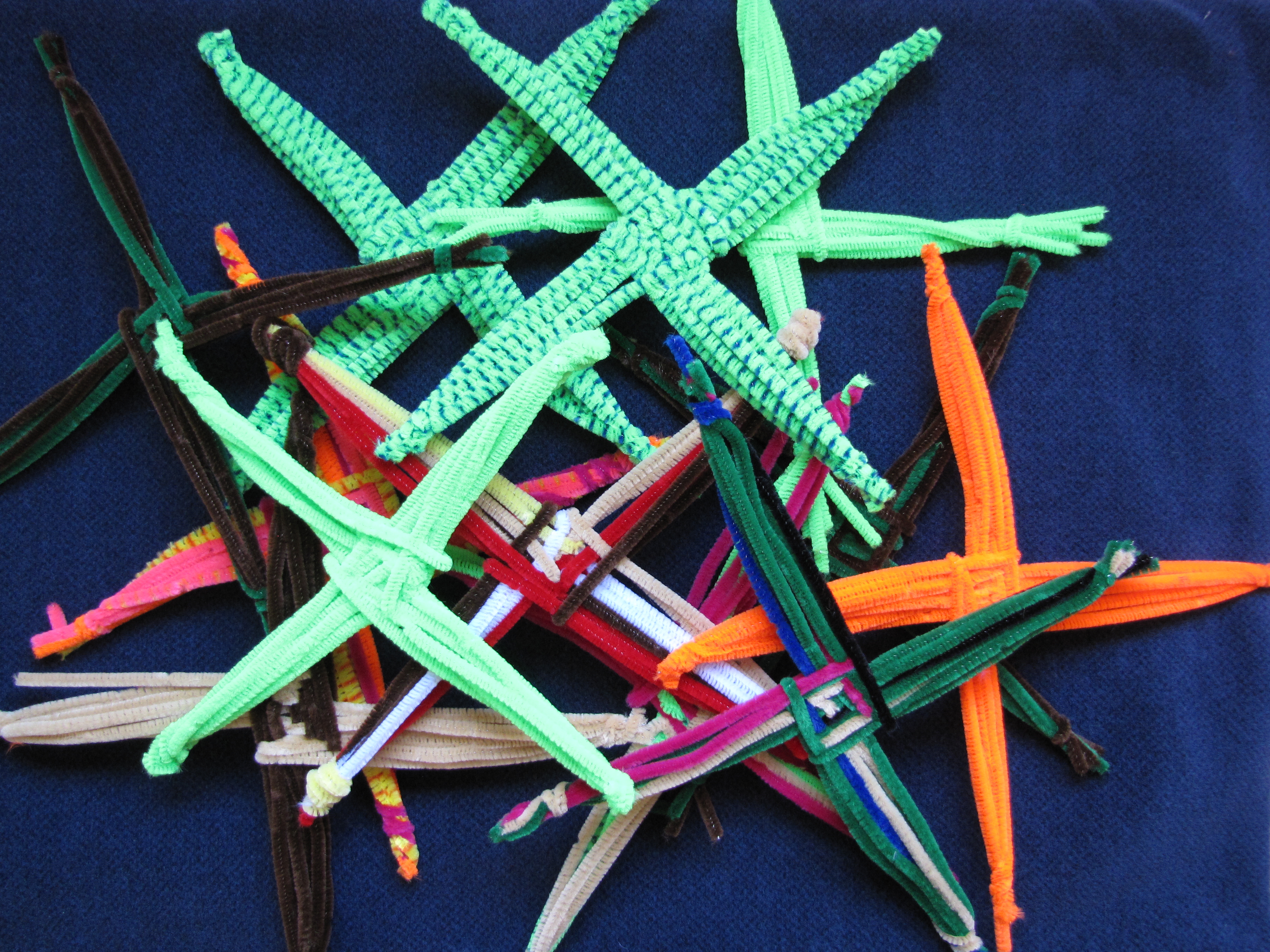
And I have ended up with so many crosses that my house is surely protected from fire and evil for years to come.

Lots and lots of pipecleaner crosses

Lots and lots of pipecleaner crosses

Posted in Folk charms, Folk traditions, Folklore, Ireland, Migration | Tagged , , , , , | 6 Comments

Hawthorn (no, not the AFL team)

The hawthorn, also known as the may, whitethorn, and in Irish sceach gheal, is a significant sacred tree in Irish folklore. Known for its general protective powers, a hawthorn was often planted near houses to keep witches away. It was known for its fertility powers, and played a key part in Maytime customs when it might be decorated with flowers and scraps of material. There’s even a saying – ‘don’t cast a clout till May is out’ – which can be translated as ‘don’t take off your heavy winter clothes until the May blossom is out’.

Another belief, widespread in Ireland, is that the hawthorn blossom is unlucky, and a harbinger of death. I remember coming home proudly as a child with an armful of pretty blossom picked for my mother, only to be thrown rudely out the back door the minute I set foot inside, with a shouted warning to get out straightaway and not bring death into the house.

So when I first set foot on Baker’s Flat, one of the things that struck me was the thorny bushes. Pepper trees and thorns are common on the site, and most commonly associated with the remains of buildings. These thorns are boxthorns (sadly, a noxious weed) not hawthorns, but I’m theorising that they were planted deliberately to mimic the Irish landscape, and to assist with protection in an alien environment.

Thorn next to pepper tree, with remains of building scattered on the ground

Thorn next to pepper tree at Baker’s Flat, with remains of building scattered on the ground

The photo below, of a cottage on Baker’s Flat, shows what appears to be a thorn bush planted next to the house.

Bakers Flat Cottage 19C

Irish-style cottage on Baker’s Flat in the 19th century

Reference
Mac Coitir, N. 2003 Irish Trees: Myths, legends and folklore. Cork: The Collins Press.

Posted in Baker's Flat, Fairy trees, Flora, Folklore, Kapunda | Tagged , , , , , , , , | 2 Comments